
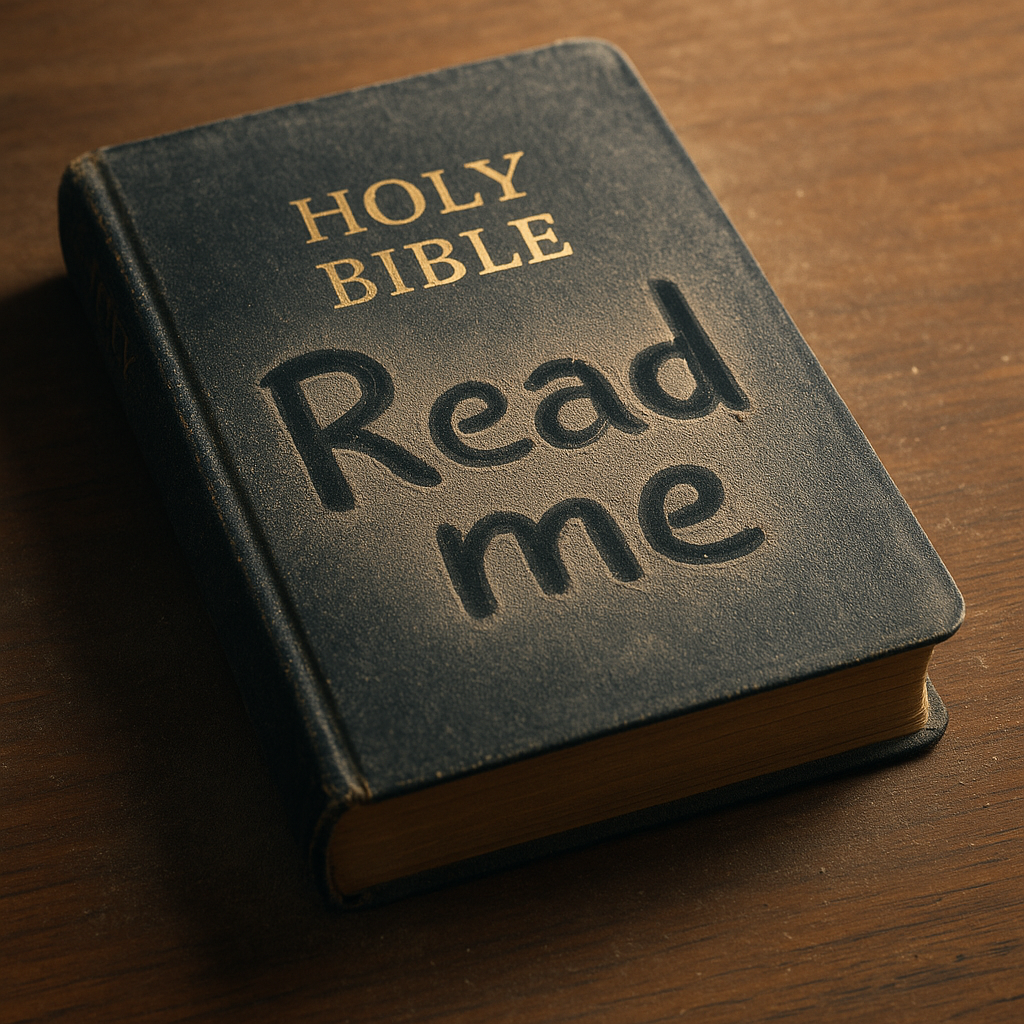
When most people hear the word “Christianity,” what comes to mind is often a religious system defined by doctrines, rituals, buildings, and hierarchies. Labeling Christianity merely as a religion can diminish its true nature and may hinder people from truly understanding or accepting it. The terminology we use matters, and referring to Christianity simply as a religion can misrepresent its essence. At its core, Christianity was never introduced in the Bible as a religion. Even the phrase “the Christian religion” is a modern invention, a flawed and misconceived expression that has contributed to misunderstanding the true identity and mission of the church.
Who Is a Christian? Where Did the Term Come From?
It all began in Acts 11:26, where we read, “…the disciples were first called Christians in Antioch.”
This is the very first mention of the term “Christian” in the Bible. What’s striking is that the believers themselves didn’t choose this title. It was outsiders who gave them this name, based on the visibly transformed lives and distinct behavior of the early church.
The term Christian comes from the Greek Christianos, which means “follower of Christ” or “belonging to Christ.” In Roman culture, the suffix -ianos was commonly used to identify political allegiance, such as Caesarianos, meaning those loyal to Caesar.
So, when early believers were called Christianos, it wasn’t originally a religious label. It was a political and social statement of loyalty, signaling that these people were living under the rule of another King: Jesus Christ.
Jesus’ Kingdom and Allegiance to Truth
In John 18:37, during His trial before Pontius Pilate, Jesus clarifies the nature of His kingship:
“You say that I am a king. For this purpose I was born and for this purpose I have come into the world, to testify to the truth. Everyone who is of the truth listens to my voice.”
When Christ was crucified as “King of the Jews” by the religious leaders, the Son of God fulfilled His earthly mission by overcoming the power of sin and death – not for Himself, but for the sake of all humanity. Through His death and resurrection, He triumphed over the grave and made it possible for anyone, through faith, to be restored to a right relationship with God, both now and forever. Before His ascension, Jesus reaffirmed the Father’s promise to send the Holy Spirit, empowering all who believe to bear witness to the truth and advance God’s Kingdom on earth.
Thus, After His resurrection, Jesus sent the Holy Spirit as promised, marking the beginning of the age of grace and divine empowerment for advancing God’s Kingdom on earth. The early church received the Holy Spirit and lived visibly transformed lives. They walked in love, integrity, and power; healing the sick, performing miracles in Jesus’ name, and boldly proclaiming the Kingdom of God. Their way of life was so compelling that outsiders gave them a name: Christians. Christianity was, and still is, a way of life.

The Way: The Consistent Identity of Believers
Jesus said in John 14:6, “I am the way, the truth, and the life…”
Before being called Christians, believers were known by another name: followers of the Way. This wasn’t just a phrase, it described a unique lifestyle. Throughout the book of Acts, early Christians weren’t identified by religion but by how they walked in “The Way.”
Let’s look at a few examples:
- Acts 9:2 – Saul (later Paul) sought out “any who belonged to the Way” to persecute them. This shows the early church was first recognized by their lifestyle.
- Acts 24:22 – Governor Felix is described as “having a more accurate knowledge of the Way.”
The movement and lifestyle of Jesus’ followers were not initially seen as a new religion, but as a remarkable way of living that set them apart from the surrounding culture. They were persecuted not just for their faith, but because their way of life challenged existing religious systems.
The Way Is a Lifestyle of Visible Transformation
Why is this significant? Because the Christian life is rooted in relationship with God through Jesus Christ and marked by transformation through the knowledge of God’s Word and the work of the Holy Spirit. This transformation means we begin to reflect the very nature of God, restoring us to our original identity and purpose to become like Christ, who is the perfect image of God. Christianity was not born out of institutional structures or formal rituals. It emerged from people who had been radically transformed by an encounter with Jesus and the Holy Spirit, and who chose to live in a way that reflected His life and teachings.
At the same time, religion was still very much alive. The Pharisees and Sadducees were the religious elite of the time, men of law, ritual, tradition, and appearance. They practiced religion, not transformation.
It was from this very religious system that Paul (formerly Saul) was called out. As a Pharisee, Paul was deeply immersed in the religious traditions and legalism of his time. But after encountering Christ, he left the old way of law for a new way of life rooted in grace and transformation. His conversion was not private, it was public, undeniable, and influential. Yet it’s important to note, as Jesus Christ Himself said in Matthew 5:17: “Do not think that I have come to abolish the Law or the Prophets; I have not come to abolish them but to fulfill them.” This reminds us that the issue wasn’t the Law itself, but the misuse of it. Jesus fulfilled the Law by embodying its true intent; love, justice, and mercy, and calls His followers into a life that reflects its fulfilled purpose.
The faith of early Christians shaped: – Their speech (how they spoke to others) – Their conduct (how they behaved, even under pressure) – Their relationships (how they forgave, loved, and served) – Their community life (how they shared resources, broke bread, and prayed together)
They didn’t just believe in Jesus, they lived like Jesus. Their lives were so compelling that people felt the need to label them: Christianos – those belonging to Christ.
That same call echoes today. People aren’t being invited into ritual; they are being called out of religion and into a life visibly aligned with Christ. A life others can see. A life that influences others, creating a ripple effect of light, truth, and transformation in families, communities, and cultures.
“You are the light of the world. A city set on a hill cannot be hidden.” – Matthew 5:14.
The Christian life is a full and joyful life, not a restricted one. It’s about living in freedom, enjoying your family, thriving in your career, building a business, creating beauty, having fun, and making a difference in the world. This has always been God’s intent for humanity. In doing so we reveal Christ through true excellence, generosity, and integrity in everyday life.
Key Takeaways: Living the Way of the Kingdom
Here are four essential truths to remember:
- Christianity Is a Lifestyle, Not Practiced in Isolation
Christianity is not a private belief system. It is a public lifestyle, lived out in the world and observed by others. Like light, it is meant to be seen. - Christianity Is Not a Religious Category
It’s not about Catholic vs. Protestant or Orthodox vs. unorthodox. Those are religious distinctions. The real question is: Are you walking in the Way? Religion may divide by structure; the Way unites by transformation. - Religion Was Present, But They Were Called Out of It
While early believers were transformed, religion was still practiced by the Pharisees and Sadducees. Paul, once immersed in religion, was not called into another set of rules, but into a new life of faith, freedom, and visible fruit. - The Christian Life Is Visible, Influential, and Contagious
True Christianity causes a ripple effect. It transforms individuals who influence families, communities, and systems. It spreads, not through coercion, but through love and personal conviction.
Conclusion: A Lifestyle That Speaks Louder Than Religion
The early Church wasn’t birthed in a temple. It wasn’t defined by rituals or denominational lines. It was a movement of people living transformed lives, so radically different that the world had to name it: Christianos.
So, the real question is not whether you check the right theological boxes.
The real question is: Would someone observe your actions and call you a Christian without you saying the word?
That’s what Christianity has always been: not a religion, but a way of life, a Kingdom lifestyle lived in allegiance to King Jesus.


Leave a Reply